Ecology services
Disease Management Advice
Practical, lawful guidance to reduce the risk of badger-borne disease, including bovine tuberculosis (bTB), on your land.
Background
Bovine tuberculosis (bTB) is one of the most damaging and costly diseases facing British livestock farms, and badgers are recognised as one of the wildlife reservoirs that can be involved in its spread. For landowners and farmers in bTB risk areas, the question is rarely whether badgers are present, but how to manage the land so that the risk of disease transmission is kept as low as reasonably possible.
Crown & Burrow provides tailored disease management advice that helps you do exactly that. We are a Natural England-licensed badger ecology firm, and our guidance is built around reducing transmission risk while keeping the local ecosystem in balance. That means working with the badger population on your land, not against it.
Our recommendations typically cover restricted-access zones, on-farm biosecurity protocols, and practical habitat modifications that decrease contact between badgers and livestock. The aim is straightforward: help protect your animals and your business, support regulatory compliance, and do so in a way that is fully lawful and humane.
Our approach
Effective disease management starts with understanding what is actually happening on your land, rather than guessing. We base every set of recommendations on real survey evidence and a clear picture of where badgers and livestock interact.
Our approach generally follows three stages:
- Survey and assessment – we carry out a badger survey to confirm sett locations, status and activity on and around your holding, and identify the routes, fields and buildings where badgers and livestock are most likely to come into contact.
- Risk-led recommendations – we translate those findings into a practical, proportionate plan focused on the points of highest risk, so your effort and budget go where they will make the most difference.
- Lawful, humane delivery – every measure we advise respects the legal protection afforded to badgers and their setts, and is designed to safeguard wildlife welfare alongside your livestock.
Because badgers and their setts are protected, we make sure any advice that touches a sett stays firmly within the law. Where works near a sett are genuinely necessary, they can only proceed under a Natural England licence, using humane methods such as one-way gates and stainless-steel mesh over a minimum 21-day exclusion period, and never during the breeding closed season.
The Problem
Left unmanaged, the interaction between badgers and livestock can create real and expensive problems:
- Badgers may carry diseases such as bTB, which can affect cattle and other livestock.
- Disease transmission poses a risk to farm animals and, in some circumstances, to people.
- Inadequate or poorly targeted preventive measures can lead to costly outbreaks, herd restrictions, and regulatory complications.
- Acting without proper survey evidence, or interfering with a protected sett, risks breaching the Protection of Badgers Act 1992 and incurring serious penalties.
In short, the risk is twofold: the disease itself, and the legal exposure that comes from trying to manage it the wrong way. Many landowners want to act responsibly but are unsure what is lawful, what is effective, and what is simply wasted effort.
Our Solutions
We give you practical guidance that addresses disease mitigation while keeping livestock safe, your operation compliant, and wildlife welfare respected throughout.
Depending on what the survey reveals, our advice may include:
- Restricted-access zones – limiting badger access to feed stores, water troughs, silage and buildings where contact and contamination are most likely.
- Biosecurity protocols – practical, on-farm measures to reduce the chances of disease moving between wildlife and livestock.
- Habitat modifications – sensible changes to land and infrastructure that reduce badger-livestock contact without harming the local population.
- Badger exclusion fencing – targeted fencing to keep badgers away from the highest-risk areas while leaving them free to forage elsewhere.
Crucially, our solutions are about coexistence, not removal. We never harm badgers, and we will always steer you towards measures that are both effective and lawful. Where your needs extend beyond disease advice, we can also help with badger surveys, mitigation plans for development, licensed sett closures, artificial sett construction, impact assessments and ongoing monitoring.
If you farm or manage land in a bTB risk area and want clear, expert advice on reducing the threat lawfully, the best first step is a badger survey. Call us on 01483 387478 or email badgers@crownandburrow.co.uk to book a survey and get a practical, risk-led plan tailored to your land.
Common questions
Disease Management Advice — FAQs
Can badgers transmit bovine tuberculosis (bTB) to my livestock?
Can you remove badgers from my farm to control disease?
What does your disease management advice actually involve?
Our work
Related case studies
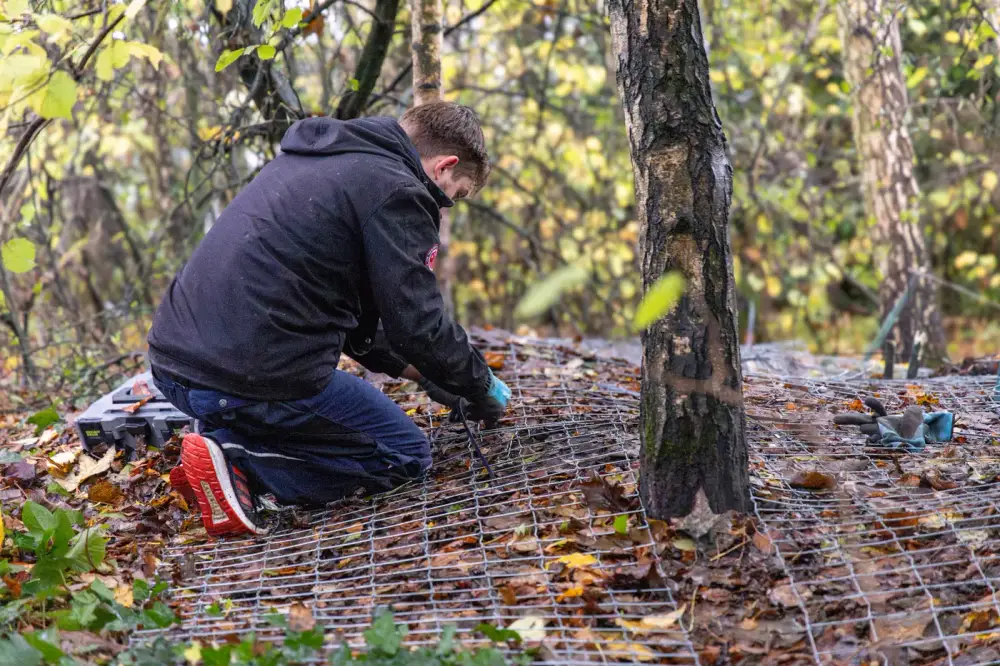
Badger Relocation Behind School Playing Fields
Humane, licensed relocation of badgers from woodland behind a school, keeping children safe and wildlife protected.
Read case study →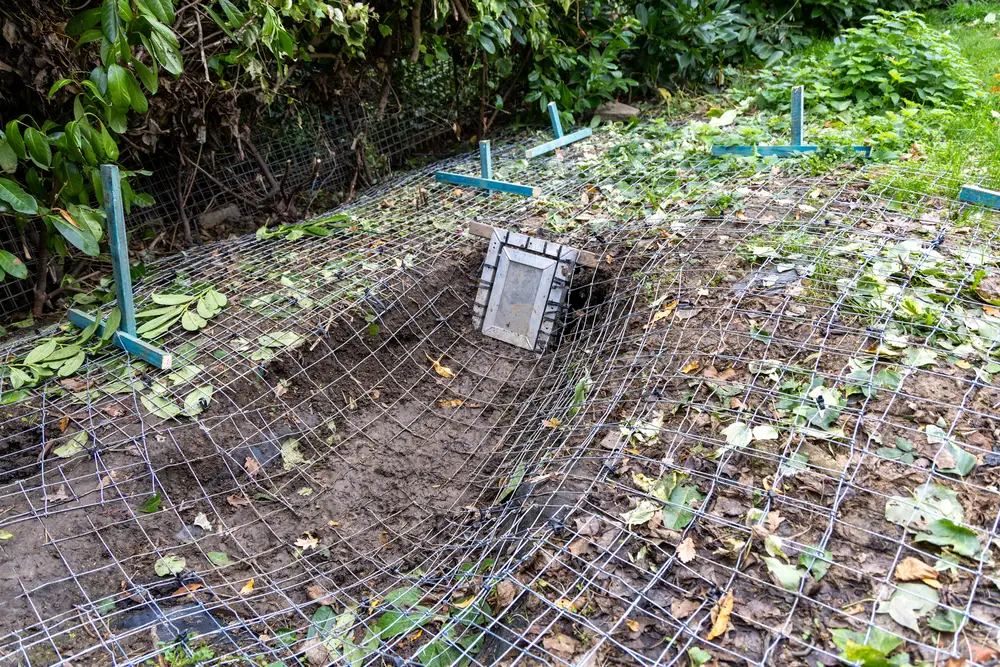
Badger-Proofing a Residential Garden
Nine active sett entrances in a residential garden secured humanely with Natural England-approved one-way gates and mesh.
Read case study →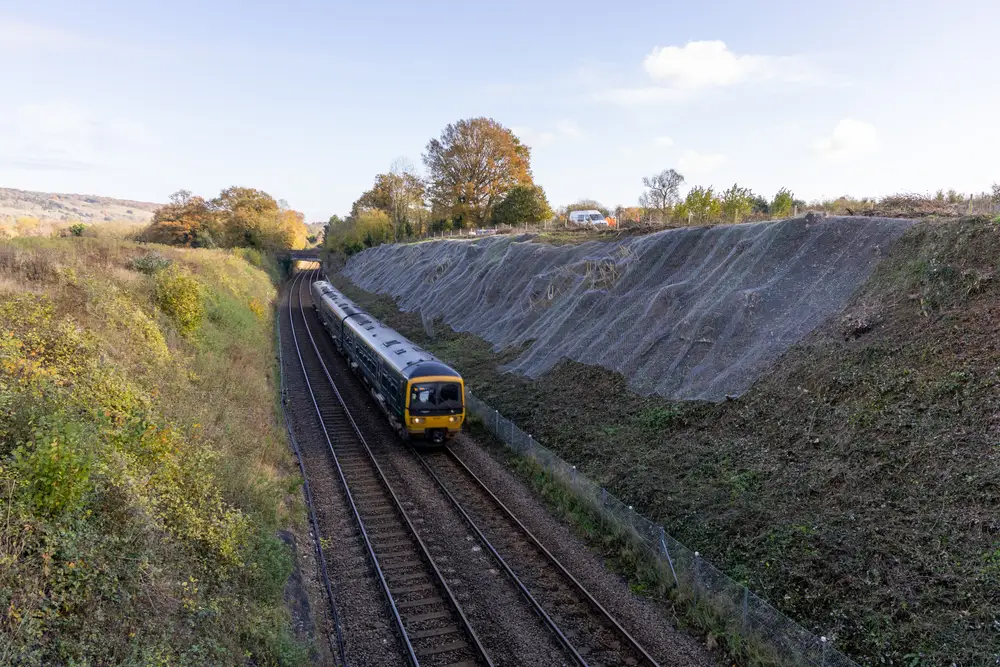
Railway Embankment Badger Sett Closure
Humane, Natural England-licensed closure of badger setts destabilising a railway embankment, relocating badgers safely and securing infrastructure.
Read case study →Protected wildlife on your site?
Book a free virtual survey and we'll advise on the licensed, humane route for your site — fast, compliant, and right first time.