Ecology services
Badger Fencing
Specialised badger-proof exclusion fencing that keeps badgers away from sensitive areas while safeguarding their welfare.
Background
Badger fencing is specialised exclusion fencing designed to keep badgers away from a defined area while protecting their welfare. It is one of the most effective ways to manage where badgers can and cannot go on a property, allowing land owners, farmers and developers to safeguard sensitive zones without resorting to harm or disturbance.
Badgers are intelligent, persistent and remarkably strong animals. They follow well-worn pathways across the landscape, often the same routes used for generations, and they will dig determinedly to reach food, shelter or familiar ground. That same behaviour is what makes ordinary fencing ineffective and what makes a properly engineered exclusion fence so valuable.
We use badger fencing to protect a wide range of settings, including:
- Gardens and amenity grounds where digging and foraging cause repeated damage
- Crop fields, paddocks and smallholdings affected by badger foraging
- Construction sites and development land where badgers must be excluded safely and lawfully
- Railway, highway and utility corridors where badger activity creates a safety or maintenance issue
In every case the aim is the same: a durable barrier that holds, installed in a way that respects the animals and the law.
Our approach
Crown & Burrow is a Natural England-licensed badger ecology firm, and every fencing scheme begins with ecology rather than hardware. Before any fence is specified we carry out a badger survey to confirm the level of activity, identify sett locations and status, and map the established pathways crossing the site.
That evidence shapes the design. We account for natural badger movement so that fencing guides animals to safe routes rather than abruptly cutting them off, which avoids the stress and displacement that poorly planned barriers cause. Where a scheme interacts with a sett, we advise on the licensing position from the outset, because interfering with a sett requires a Natural England licence under the Protection of Badgers Act 1992.
Our fencing is engineered for the way badgers actually behave:
- Buried or turned-out stainless-steel mesh aprons to defeat digging at the base
- Mesh gauge, height and post spacing matched to the pressure on each site
- One-way gates where badgers need to be allowed out but not back in
- Integration with sett closures, alternative setts and wider mitigation where required
The result is fencing that works in practice and stands up over time, not a barrier that badgers simply tunnel beneath within a season.
The Problem
Badger activity in the wrong place is a genuine and recurring problem. Foraging and digging can damage lawns, crops, drainage, foundations and landscaping, and the disruption tends to return year after year because badgers are creatures of habit.
The instinctive response is to put up a fence, but standard fencing rarely succeeds:
- Conventional stock and panel fencing has no defence against digging, so badgers simply excavate underneath
- Poorly designed barriers can sever established pathways, stressing the animals and pushing the problem elsewhere
- Unlicensed work that disturbs or blocks a sett is a criminal offence under the Protection of Badgers Act 1992
So the challenge is twofold: the fencing has to be strong and dig-resistant enough to actually hold, and the whole scheme has to be lawful and humane. Getting either part wrong is costly, whether through failed fencing, wildlife harm or legal exposure.
Our Solutions
Our expertly installed badger fencing deters entry into restricted areas and allows for safe, sustainable land management that respects the needs of wildlife. Because the design is built on survey evidence and an understanding of badger behaviour, it does what ordinary fencing cannot: it holds.
We can deliver fencing as a standalone measure or as part of a wider package, including:
- Badger surveys to confirm sett status and activity
- Mitigation and method statements for planning and development
- Licensed sett closures using one-way gates and stainless-steel mesh over a minimum 21-day exclusion period, outside the breeding closed season (approximately 1 December to 30 June)
- Construction of artificial or alternative setts where displacement is unavoidable
- Ongoing monitoring and maintenance to keep the exclusion effective
Throughout, the principle is constant: Crown & Burrow protects your site without ever harming the badgers.
If badger activity is causing damage on your land, or a development requires lawful exclusion, the first step is a survey. Call us on 01483 387478 or email badgers@crownandburrow.co.uk to book a badger survey and we will advise on the right, fully licensed solution for your site.
Common questions
Badger Fencing — FAQs
Can badgers climb fences?
Do I need a Natural England licence to install badger fencing?
How does badger fencing stop badgers digging underneath?
Will the fencing harm or trap the badgers?
Our work
Related case studies
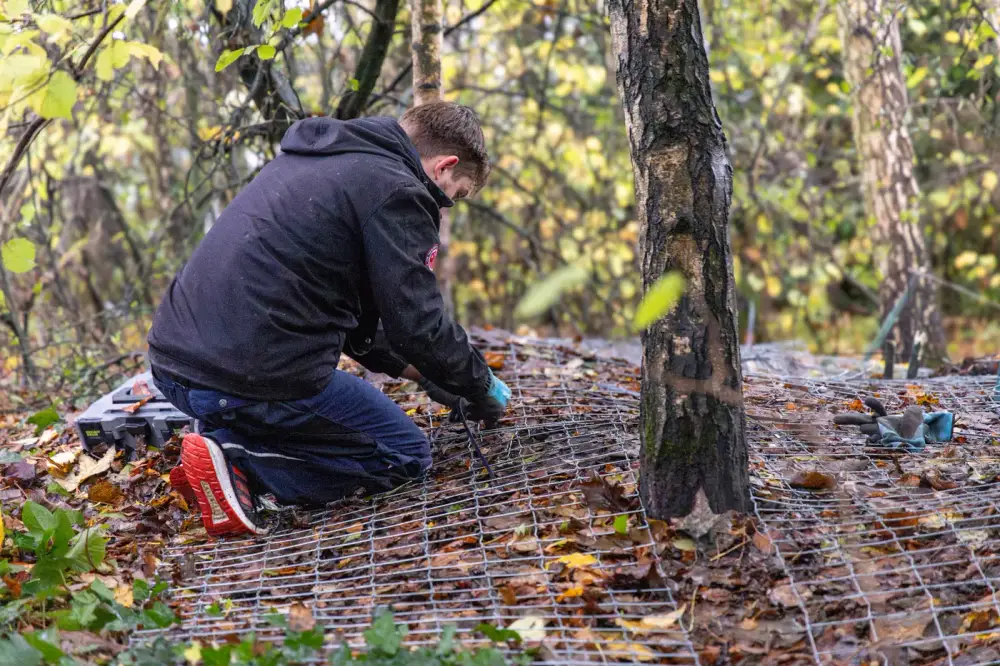
Badger Relocation Behind School Playing Fields
Humane, licensed relocation of badgers from woodland behind a school, keeping children safe and wildlife protected.
Read case study →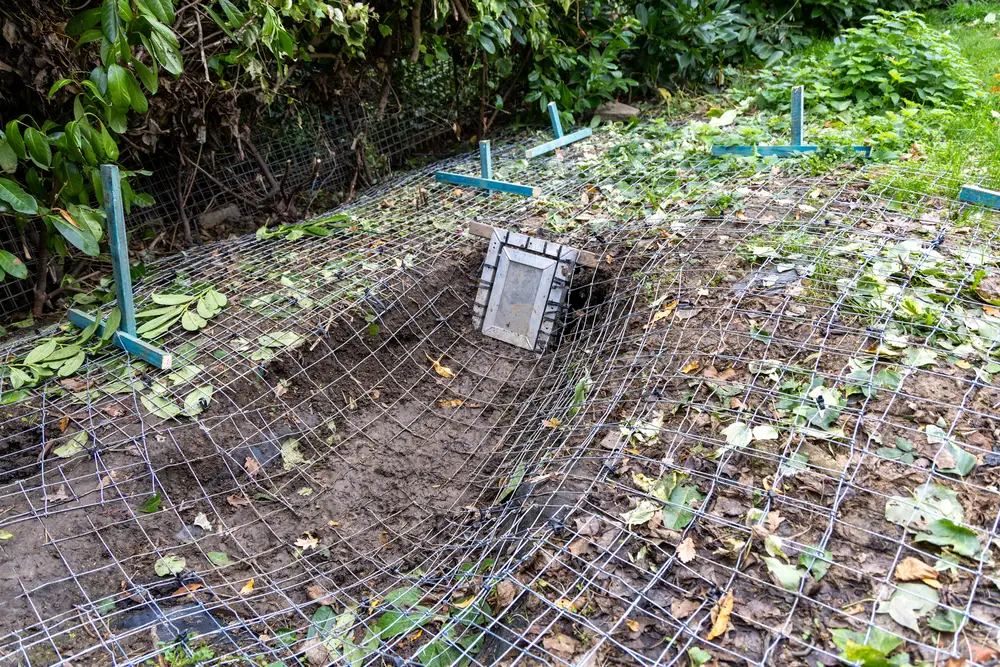
Badger-Proofing a Residential Garden
Nine active sett entrances in a residential garden secured humanely with Natural England-approved one-way gates and mesh.
Read case study →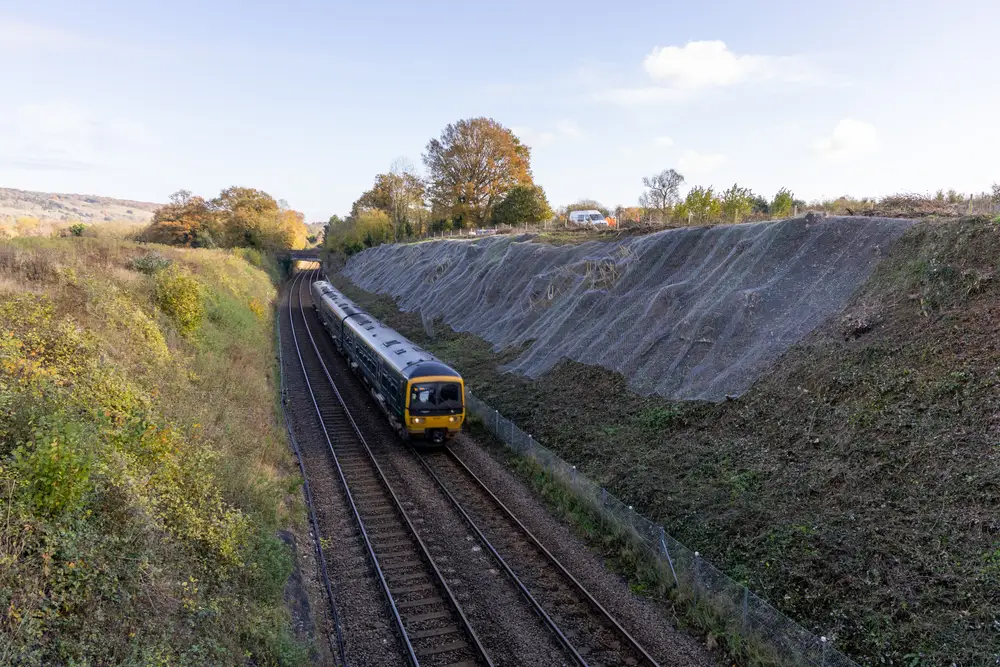
Railway Embankment Badger Sett Closure
Humane, Natural England-licensed closure of badger setts destabilising a railway embankment, relocating badgers safely and securing infrastructure.
Read case study →Protected wildlife on your site?
Book a free virtual survey and we'll advise on the licensed, humane route for your site — fast, compliant, and right first time.